

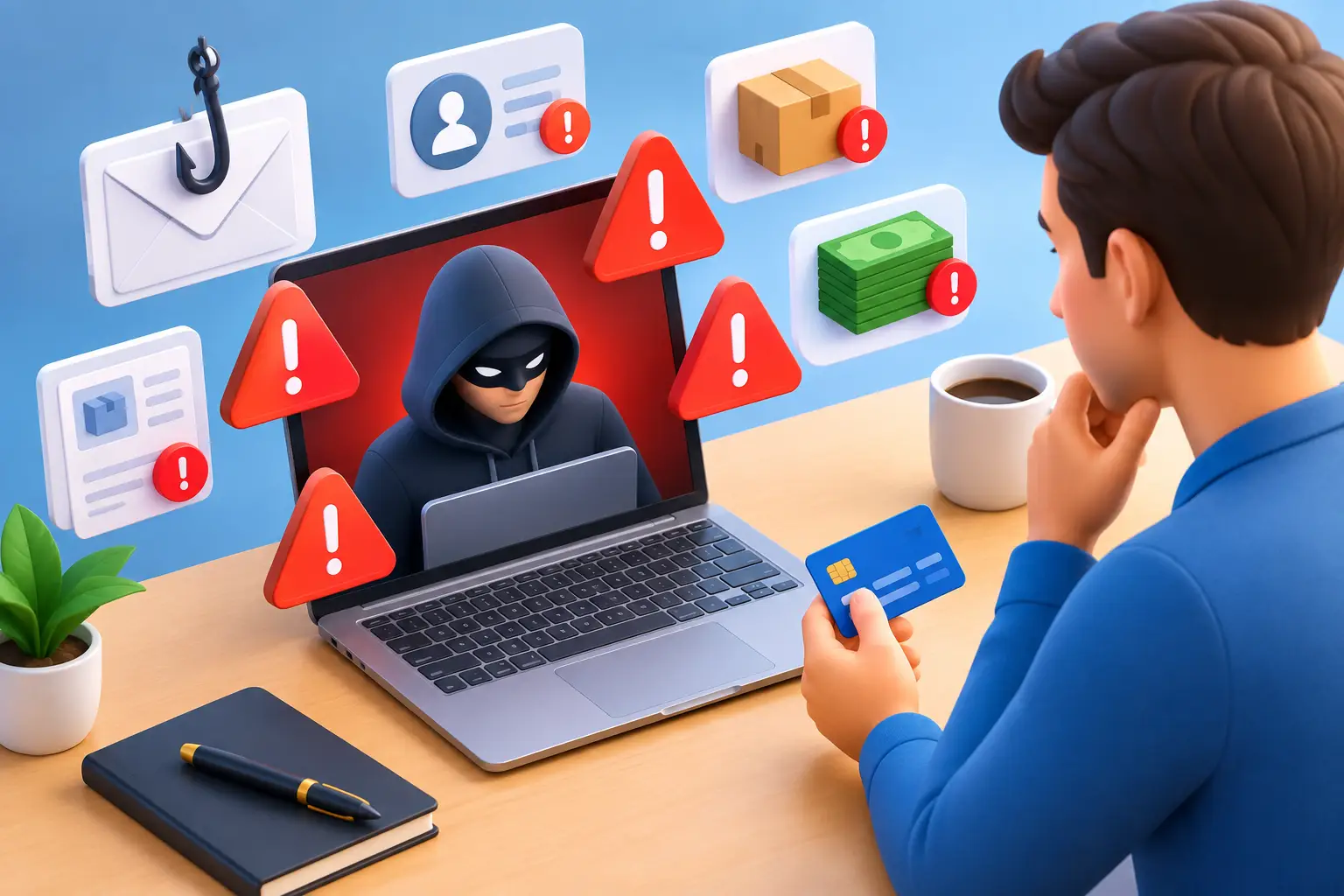
A supplier can look legitimate right up to the moment your deposit disappears. A polished website, responsive sales representative, company registration number, and professional invoice are not proof that the business can deliver, owns the bank account, or is authorized to sign the deal. Commercial fraud red flags often emerge in the gaps between those claims.
For procurement teams, traders, and operators working with unfamiliar counterparties, the risk is rarely limited to one lost payment. A failed supplier can halt production, expose the buyer to sanctions or regulatory issues, damage customer relationships, and create an internal approval problem that is difficult to explain after the fact. The practical question is not whether a prospect looks credible. It is whether its identity, ownership, authority, operating history, and payment instructions hold up under independent verification.
Commercial Fraud Red Flags to Check Before Payment
A single concern does not automatically mean fraud. A newer company may have a short trading history; a legitimate seller may use a different logistics provider; a bank account may change for a valid operational reason. The concern rises when multiple discrepancies appear and the counterparty pressures you to proceed before they are resolved.
1. The company identity does not match across documents
Start with the legal entity name, registration number, jurisdiction, and registered address. These details should be consistent across the contract, quotation, invoice, website, corporate registry, and bank documentation.
Common warning signs include a website using one company name while the invoice names another, a registration number that belongs to an unrelated business, or a purported office address that is a virtual mailbox with no connection to the stated operation. Small formatting differences can be innocent. Material differences in the legal entity receiving payment are not.
2. The business has a very recent or thin operating footprint
Newly incorporated companies are not inherently unsafe, especially in fast-moving trading markets. But a new entity presenting itself as a long-established manufacturer, major distributor, or high-volume exporter requires closer scrutiny.
Assess whether its claimed history is supported by evidence. Look for a credible web presence over time, consistent business contact details, identifiable management, product documentation, trade references, and records that align with its stated activities. A business claiming decades of experience but leaving no reliable trail before last month deserves a pause.
3. Ownership and signing authority are unclear
Fraudsters frequently rely on unclear authority. The person negotiating may call themselves a director, owner, or regional representative, yet have no documented authority to bind the legal entity. In more complex cases, the disclosed contact may be real but is being impersonated through a lookalike email address.
Verify who ultimately owns or controls the company where legally accessible information permits, who serves as director or officer, and who has authority to sign contracts and issue payment instructions. If the person requesting funds cannot be connected to the entity through reliable records or direct confirmation, do not treat a business card or email signature as evidence.
4. Payment instructions change late in the transaction
This is one of the most costly commercial fraud red flags because it targets a moment when the buyer has already completed negotiations and internal approvals. A supplier may ask you to pay a newly provided account because of an audit, tax matter, currency restriction, or temporary banking issue.
Treat every change in beneficiary name, account number, bank location, or payment currency as a new verification event. Do not confirm the change by replying to the same email thread. Use independently verified contact details, involve a known senior contact, and document the confirmation. A genuine supplier should understand why this control exists.
5. The bank account belongs to a different party or country
A request to pay a third-party account can have legitimate commercial explanations, such as a group treasury arrangement. It can also conceal a diverted-payment scheme, an undisclosed intermediary, or an attempt to move funds beyond the reach of a dispute.
The explanation must be supported, not merely asserted. Ask why the payment recipient differs from the contracting entity, what legal relationship connects them, and whether the arrangement is stated clearly in the contract and invoice. A mismatch between the supplier’s claimed location and the account’s jurisdiction also warrants review, particularly when it has no obvious business purpose.
6. Pricing, volume, or terms are unusually favorable
Fraud often uses commercial urgency and exceptional pricing to weaken normal controls. A prospect may offer scarce goods at far below market price, demand a large advance payment to reserve inventory, or promise production capacity that established competitors cannot match.
A low price alone is not proof of wrongdoing. It may reflect liquidation, an introductory arrangement, or a genuine supply advantage. The right response is to test whether the commercial story is plausible: Can the company show it sources or manufactures the goods? Do product specifications, lead times, shipping terms, and requested payment terms fit the industry? Is the claimed capacity consistent with the business’s observable footprint?
7. Documents look polished but do not withstand checking
Fraudulent certificates, licenses, bills of lading, inspection reports, and corporate documents can be visually convincing. Their value lies in what can be verified, not in the quality of their design.
Check issuing authorities where possible, review dates and reference numbers, and compare company details across every document. Watch for altered logos, generic stamps, inconsistent fonts, missing signatories, or documents that name a related but different entity. A document that cannot be independently tied to an issuer should not be used to justify a high-risk payment.
8. The counterparty resists ordinary due diligence
A legitimate company may protect sensitive information, particularly pricing, customer lists, or proprietary operations. That does not excuse refusal to provide basic evidence needed to establish identity, authority, and payment legitimacy.
Be cautious when a counterparty avoids direct calls, declines video meetings, will only communicate through free email accounts, or reacts aggressively to routine verification questions. Pressure to bypass procurement, finance, legal, or compliance review is especially concerning. Professional counterparties expect reasonable controls before a material contract is approved.
9. Public records show regulatory, litigation, or adverse-media concerns
A company may be legally registered and still present substantial commercial risk. Regulatory actions, insolvency proceedings, recurring disputes, allegations of non-delivery, sanctions exposure, or links to previously failed entities can alter the decision entirely.
Context matters. One resolved claim does not make a company fraudulent, and public allegations should be evaluated carefully. However, a pattern of unresolved disputes, opaque ownership, repeated name changes, or enforcement activity should trigger enhanced review before funds, goods, or exclusivity rights are committed.
10. The proposed transaction cannot be independently corroborated
The final test is practical: can the core deal be confirmed outside the counterparty’s own communications? For goods, that may mean verifying warehouse access, production capability, inspection arrangements, shipping records, or the role of the stated logistics provider. For a partnership or investment, it may mean confirming assets, licenses, operating locations, management roles, and the legal status of the entity.
When every critical fact comes from the seller, risk remains unmeasured. Independent corroboration will not eliminate risk, but it can expose the difference between a real operating business and a convincing sales presentation.
Turn Red Flags Into a Decision Process
The goal is not to investigate every small vendor as if it were an acquisition target. The depth of due diligence should reflect the exposure. A low-value, repeat purchase from a known supplier needs different controls than a first-time overseas order involving a large deposit, regulated goods, or a long-term distribution agreement.
Before approval, establish a clear file containing verified entity details, ownership or control findings where available, authorized signatory evidence, payment-account confirmation, and documented checks of relevant regulatory or adverse public-record concerns. For higher-risk transactions, add market plausibility checks and independent confirmation of the goods, services, or assets involved.
This process also protects the decision-maker. If a concern later arises, your business can show that it identified the risks, sought evidence, escalated exceptions, and made a documented commercial decision rather than relying on informal reassurance. SDDCheck’s source-cited due diligence reports are designed to give teams that evidence quickly when a counterparty is unfamiliar or the stakes are high.
The safest time to challenge a discrepancy is before the purchase order is issued and before the first payment leaves the account. A supplier that is genuine will usually help resolve reasonable questions. A supplier built on deception will often reveal itself when asked to substantiate the deal.