

Hong Kong’s cryptocurrency over-the-counter (OTC) market narrowly avoided a major loss on January 15, 2026, when a group of virtual asset sellers uncovered a suspected cheque-based fraud involving a claimed payment of HK$160 million. The incident highlights a growing trend in Hong Kong, where traditional financial instruments, such as cheques, are being used against participants in high-value digital asset trades.
Overview of the Mong Kok Incident
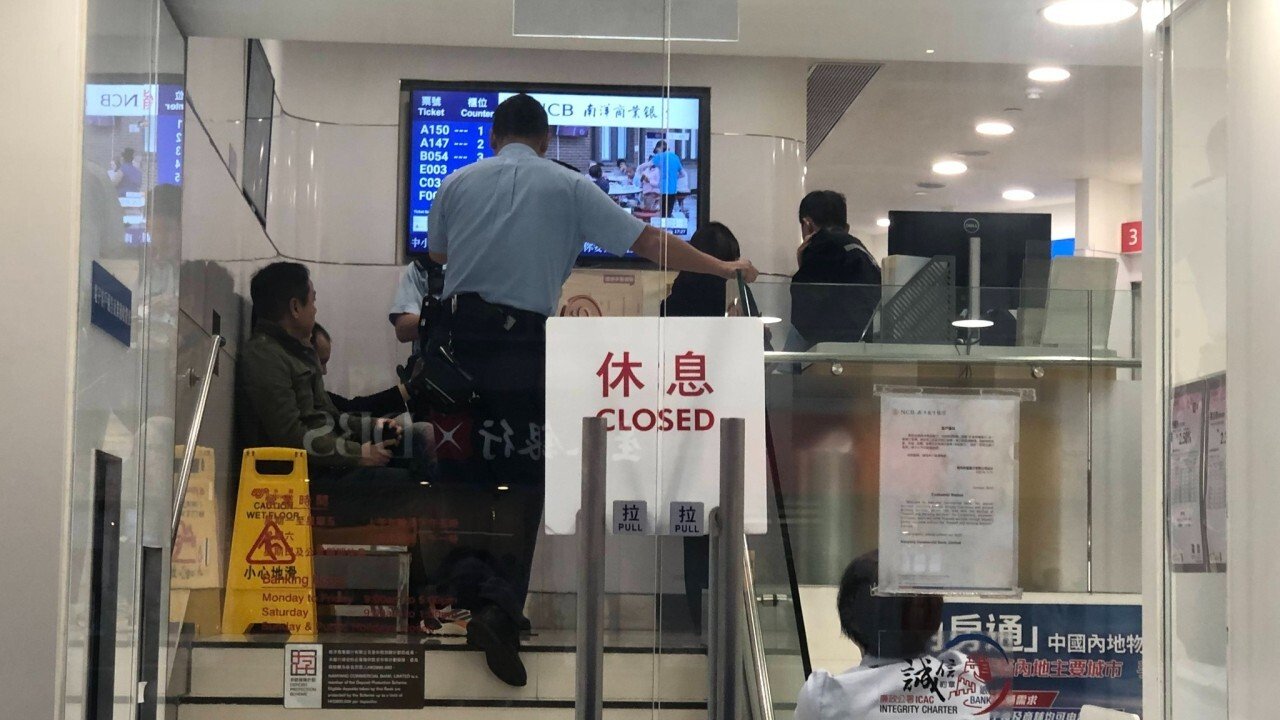
On the afternoon of January 15, 2026, shortly before 5 p.m., several men and women – including mainland Chinese nationals and Hong Kong residents – arrived at a bank on Nathan Road near Mong Kok Road, carrying a cheque with a stated value of over HK$160 million. They requested bank staff to verify the authenticity and status of the cheque, which had been presented to them as payment in a cryptocurrency transaction. After internal checks, bank staff confirmed that the cheque was recorded in the system as already redeemed, meaning it could not be cashed again, and considered the circumstances suspicious enough to call the police.
Police officers from Mong Kok District responded to the scene and took statements from those involved. Preliminary enquiries indicated that several mainland Chinese men had agreed to sell virtual currency through a Hong Kong intermediary, and had earlier collected this high-value cheque from the purported buyer in Central as consideration for the transaction. The buyer allegedly exerted continuous pressure on the sellers to transfer the virtual assets promptly, urging them to complete the on-chain transfer as soon as possible.
Crucially, instead of yielding to the pressure, the sellers and intermediaries chose to verify the cheque at the bank before making any blockchain transfer. This step exposed that the cheque had already been redeemed, effectively preventing what could have become a substantial fraud loss.
Lucky – But Also a Case Study in Good Practice
From a risk and compliance perspective, the parties involved were objectively fortunate to have verified the cheque before moving any cryptocurrency. In typical cheque-clearing frauds, the victim accepts a cheque, sees a provisional balance or forged proof of payment, and transfers irrecoverable assets – such as USDT – only to discover later that the cheque has bounced or is invalid. In this case, the decision to go physically to the issuing bank and request a real-time verification broke that pattern and stopped the scheme at the intent stage.
Because no cryptocurrency had yet been transferred and no funds were actually withdrawn on the basis of the cheque, police treated the individuals at the bank as potential victims or witnesses rather than suspects at that point. Officers accompanied four men and one woman to Mong Kok Police Station to record statements, while another mainland woman – who reportedly behaved in an uncooperative and confrontational manner – was escorted on foot to the station for further enquiries. As there was no completed loss and no redemption attempt at the counter, officers indicated that there was, at that stage, no clear criminal element established, and the case was classified for further investigation instead of immediate arrest action.
This outcome underscores a critical point for market participants: early verification not only prevents financial loss but also significantly changes one’s legal posture – from a possible party in a suspicious transaction to a protected victim or witness cooperating with law enforcement.
How the Fraud Pattern Works
This incident fits into a broader pattern where fraudsters blend legacy payment instruments with digital asset markets. Several recurring elements can be identified:
- Use of Cheques for High-Value Trades Fraudsters propose extremely large trades – in this case, a cheque exceeding HK$160 million – to gain attention and perceived legitimacy, even though such sizes are atypical for most OTC cash/cheque-based deals.
- Exploiting Clearing and Information Gaps Cheques in Hong Kong require 1–2 business days to clear fully. During this window, an account may show an accounting balance while the funds are not truly available, creating room for misrepresentation and confusion.
- Irreversibility of Crypto Transfers Once virtual assets are transferred on-chain, they cannot be reversed by banks or intermediaries, and criminals can swiftly move funds through multiple wallets or mixers.
- Pressure Tactics and Urgency Fraudsters often apply psychological pressure – repeated calls and messages urging immediate transfer, citing deadlines or purported liquidity needs – to reduce the victim’s inclination to verify the payment properly.
In many documented USDT and crypto-related cheque scams, the victim only discovers the fraud after the cheque is dishonoured or revealed to be stolen, counterfeit, cancelled, or already redeemed. By that time, the digital assets are long gone.
Hong Kong’s Growing Crypto-Fraud Exposure
Recent years have seen an uptick in cryptocurrency-related scams and incidents in Hong Kong, ranging from romance-investment cons to OTC robbery and complex cheque-based frauds. Reports have highlighted that USDT and other stablecoins are frequently used by syndicates due to their liquidity and ease of cross-border transfer.
Regulators and banks in Hong Kong have issued multiple warnings about cheque fraud and the specific risks when combining traditional payment instruments with high-speed, irreversible virtual asset transfers. Guidance from banks emphasizes that:
- A reflected deposit does not equal cleared funds.
- Customers should not deliver goods or assets solely based on screenshots or provisional balances.
- Large cheques should receive heightened verification, especially when counterparties are new or cross-border.
The Mong Kok case illustrates how these warnings play out in the real world. It also demonstrates the real operational risk for intermediaries – who often sit between buyers and sellers and are exposed on both sides – if verification is not handled systematically.
Lessons and Takeaways for SDDCheck and OTC Participants
From a due diligence and risk management standpoint, this event reinforces several best practices that sophisticated market participants should embed into their standard operating procedures:
- Mandatory Bank Verification for Cheques For any sizeable cheque settlement – particularly in the tens of millions – verification at the issuing bank should be non-negotiable before any crypto transfer or service delivery.
- Clear Internal Policies on “Funds Cleared vs Funds Seen” Teams should be trained to distinguish between a deposit shown on a statement and actual cleared, available funds. This distinction must be embedded in workflow approvals.
- Refusal to Act Under Pressure Any counterparty who repeatedly urges “immediate transfer” before payment verification should be treated as a red flag. Internal policies should explicitly prohibit transfers under unresolved payment doubt.
- Counterparty and Transaction Profiling Large, first-time, cross-border transactions paid by cheque warrant enhanced due diligence: identity verification, corporate background checks, and independent validation of payment capacity.
- Documented Audit Trail Keeping full records of chats, call logs, and transaction documents supports both internal risk reviews and potential cooperation with law enforcement if a suspicious pattern emerges.
In this case, the sellers’ decision to pause, verify, and seek clarity turned what could have been a major loss into a near-miss and a valuable case study. From a third-party risk and compliance perspective, they were fortunate – but their prudence in insisting on a bank check is exactly the type of protective behaviour that SDD-focused organizations should promote and formalize.
For platforms and businesses engaged in digital asset due diligence, this incident is a timely reminder: hybrid schemes that link old-world instruments like cheques to new-world assets like USDT are no longer theoretical. They are active in the market, and only robust verification, conservative settlement policies, and disciplined refusal to act under pressure will keep participants on the “lucky” side of the line.